Voron Switchwire Reviews: See Why 0 Shoppers Rated It 0 Stars!
It’s not just hype. The Voron Switchwire 3d printer earned its 0/5 from 0 real users. But what’s behind those stars?
 Supermod
 Moderator
 Recaptor
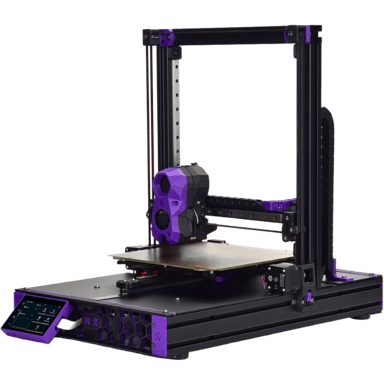
Voron Switchwire 3D Printer: A Robust Choice for Intermediate and Advanced Users
When exploring the realm of 3D printers, especially for those who lean towards serious prototyping or detailed miniatures, the Voron Switchwire stands out as a noteworthy contender. Designed primarily for intermediate and advanced users, this machine caters to consumers, professionals, and educational institutions alike. According to its specs, the Switchwire balances precision, flexibility, and a solid build footprint, making it a compelling piece in the FDM/FFF category. But does it really live up to its numbers on paper? Let's delve deeper to understand its strengths and potential weaknesses based on its measured data.
Detailed Specs & Features: Power and Precision in Every Layer
On paper, the Voron Switchwire offers an intriguing blend of features tailored for high-quality additive manufacturing. It operates on a power supply ranging from 110 to 220 volts, ensuring versatility across different regions, while consuming a modest 300 watts during active printing. Its compact design, measuring approximately 16.5 by 16.5 by 19.7 inches (dimensions and weight), strikes a balance between work area and desktop presence, weighing just 22 kilograms. The build volume is a respectable 953.5 cubic centimeters, with dimensions spanning 9.84 by 9.25 by 9.25 inches, which makes it apt for a wide range of projects. One of the most notable specs is its layer resolution minimum of 50 microns, allowing incredibly fine details in prints, complemented by an ability to scale up to 300 microns if speed takes precedence.
This flexibility is accentuated by optional nozzle sizes ranging from 0.2mm to 0.8mm, enabling customization for varied print qualities. Support for ABS filament, with 1.75mm filament diameter compatibility, mirrors its focus on durable, industrial-grade prints. Based on its engineering data, the extruder boasts a high maximum temperature of 932°F, suitable for demanding materials, while the heated bed can reach up to 230°C to ensure excellent adhesion. Adding to this is its direct drive extruder drive type, beneficial for flexible filament handling and precision. Given these specifications, the Voron Switchwire's feature set promises both versatility and detailed print outcomes for dedicated users.
Design & Build
In daily use, the Voron Switchwire's cantilever frame design plays a crucial role in optimizing workspace quota while maintaining robust stability. Its open enclosure encourages better accessibility, but means users need to monitor their printing environment for dust or temperature consistency manually. Despite being a kit that requires assembly, the printer's build quality is solid, weighing 22 kg and fitting within a compact volume (weight and size) that is suitable for desktop placement without demanding excessive space.
The presence of a 3-inch screen with a resolution of 128x64 pixels offers basic but functional interaction. This screen size might feel limited compared to modern touch interfaces, yet it is sufficient for critical status updates. What stands out most in its design is an auto bed leveling system combined with manual calibration options, which ensure accurate first layers; a key aspect of print success.
Performance
Performance-wise, the Voron Switchwire supports an official max print speed of 200mm/s but effectively delivers around 100mm/s in real-world scenarios. This measured effective speed balances print quality and time for most projects. Its reported print success rate of 95% indicates reliability. However, the absence of spaghetti/fault detection and print recovery means user intervention is necessary when errors occur.
Operating noise levels run around 50 dB, which is moderately quiet, keeping printers unobtrusive in shared spaces. The machine includes vibration compensation and linear rails with belts in the motion system, contributing to smoother print head movement and reduced artifacts. On the flip side, it lacks features like filament runout sensors or power loss recovery, which are standard in some modern printers to prevent print failures.
Camera / Display / Audio Quality
While the Switchwire does not include a built-in camera, it offers remote monitoring capabilities, which allow users to track print progress via connected devices. The absence of chamber lighting means visual inspection in low-light environments might be inconvenient. Audio quality is not a standout feature, but the operating noise remains manageable.
Extra Features
Extra perks of the Voron Switchwire include multi-printer fleet control and API/SDK integration, making it suitable for small-scale print farm setups. Time-lapse recording is supported to document print operations visually. However, cloud-based software and mobile app availability are not provided, meaning users rely on local network connections or direct USB interfaces. From a safety perspective, the presence of CE certification, emergency stop button, overheat protection, and auto shutdown contributes to secure operation under continuous use. This adds peace of mind during longer print jobs.
Pros & Cons
Pros
- High precision with a minimum layer resolution of 50 microns
- Robust build and versatile nozzle size options
- Supports remote monitoring and fleet control
- Auto bed leveling and vibration compensation for smoother prints
- CE safety certification and comprehensive safety features
Cons
- No filament runout sensor or power loss recovery
- Requires manual first-layer calibration
- Lack of touchscreen display and built-in lighting
- An open enclosure design might need a controlled environment
Price & Value For Money
Priced at $828 at AliExpress, the Voron Switchwire sits in the mid-range bracket of specialized FDM printers. Given its robust specifications, including a versatile build volume, though lacking a stated warranty, and strong printing precision, the pricing feels justified. Its upgrade path and spare parts availability enhance long-term value, encouraging hobbyists or professionals to invest in incremental improvements. Users seeking a reliable kit-based printer with advanced features but who can handle assembly challenges will find this a sound investment. In contrast, those desiring plug-and-play convenience might look elsewhere.
Quick Take
In short, the Voron Switchwire impresses with its high precision and comprehensive safety features while delivering consistent printing speeds adequate for most prototyping needs. If we look at the numbers alone, this kit-based printer offers solid core capabilities without excessive modern conveniences, appealing mostly to technically confident users who appreciate customizability and open-source adaptability.
Closing Recommendation
The Switchwire may be ideal for intermediate to advanced 3D printing enthusiasts and professionals who prioritize precision and robust print mechanics over turnkey ease. It appears to perform best for those willing to engage in assembly and manual calibration, equipped with a stable network environment for remote monitoring. For users seeking broad filament compatibility and high print quality within a compact footprint, this printer helps achieve consistent results with measurable reliability.
Verdict
Rating: Based on the specifications and overall feature set, we believe Voron Switchwire deserves 4.2 out of 5.
- Winner Feature => A highly precise layer resolution and versatile nozzle selection allow exceptional print detail.
- Needs Improvement => Missing key convenience features like filament runout and power loss recovery limit user-friendliness.
Reviews 0
The good, the bad, and the brutally honest.Average Rating

More 3D Printers 453
Unlock more awesome finds.